
Education: the next generation of biosecurity heroes
Marine biosecurity isn't just the job of scientists and biosecurity officers. Sometimes the people who make the biggest difference are simply those who know what to look for. Thanks to marine biosecurity education out in the public and through schools, that’s happening more and more - and sometimes it’s our tamariki who are taking the lead.
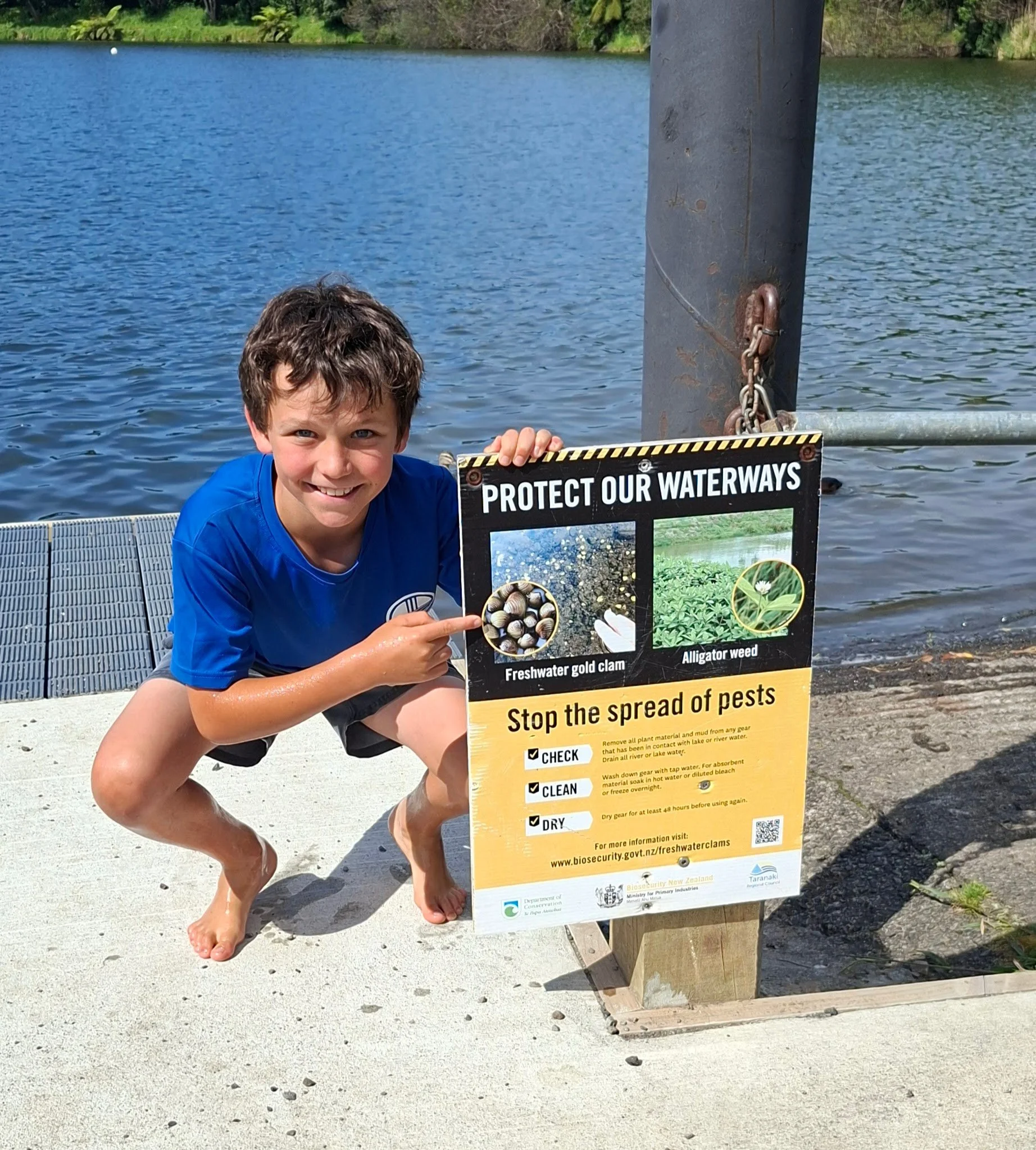
In 2025, ten-year-old Max Hamilton (pictured) attended a Kids' Fishing Day at Lake Rotomanu in Taranaki. He spotted a shell in the lake, and didn’t think anything of it until later that day when he visited the Biosecurity Taranaki stand, he saw the displays of invasive freshwater gold clam (Corbicula fluminea) and told the team that he’d seen one nearby earlier. They visited the site with him and sure enough, found that shell. Two days later, live clams were found in the lake. This was the first detection of freshwater gold clam outside the Waikato River and triggered a rapid biosecurity response.
Awareness leads to early detection.This is why education matters. Every boatie, diver, fisher, beachcomber and family has the potential to notice something unusual. Knowing what to look for, and reporting it quickly, can give biosecurity teams the best chance of containing a pest before it spreads.
Teachers - how you can inspire the next generation of marine pest finders
Our free Marine Biosecurity Education Module helps Years 5-8 students discover what marine pests are, why they matter and how they can help protect New Zealand's coastlines. Through hands-on classroom activities, investigations and optional beach-based learning, students develop the skills to recognise, report and help prevent the spread of marine pests. The curriculum-aligned resource is available as Google Slides and printable PDFs, making it easy for teachers to use in the classroom or at home. Explore the module and help inspire the next generation of marine biosecurity champions.
Also check out the Marine Invaders game! A fun New Zealand resource for schools and groups.
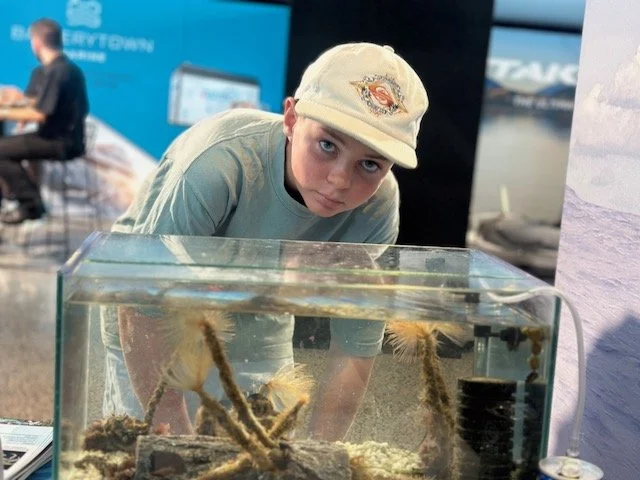
From boat shows to in-school programmes, the next generation is getting familiar with marine pests.