Introducing CrushStation - an AI-powered crab trap
Cawthron’s Marine Biosecurity Group has teamed up with Victoria University of Wellington’s Artificial Intelligence Laboratory to develop the world’s first smart trap for invasive crab species.
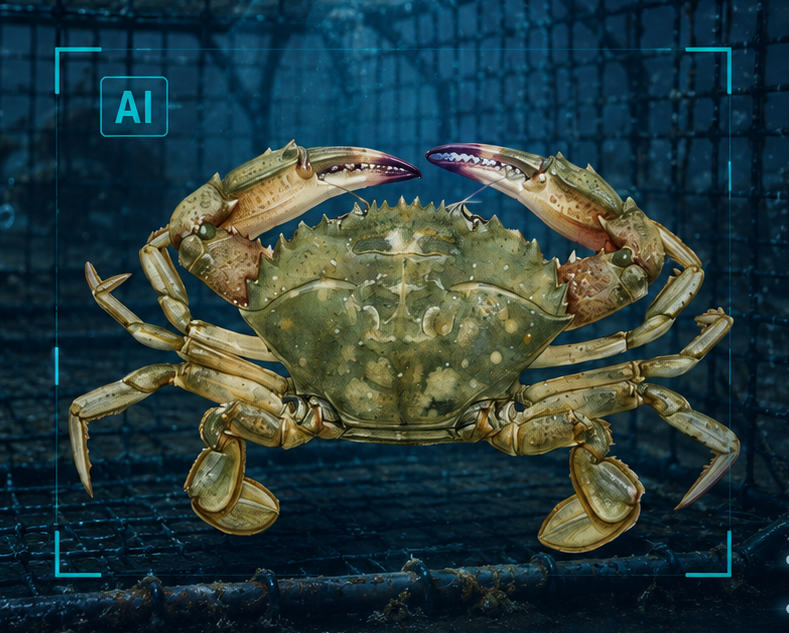
Using advanced deep learning approaches, the traps will be trained to recognise invasive crabs from NZ’s native fauna and humanely dispose of them.
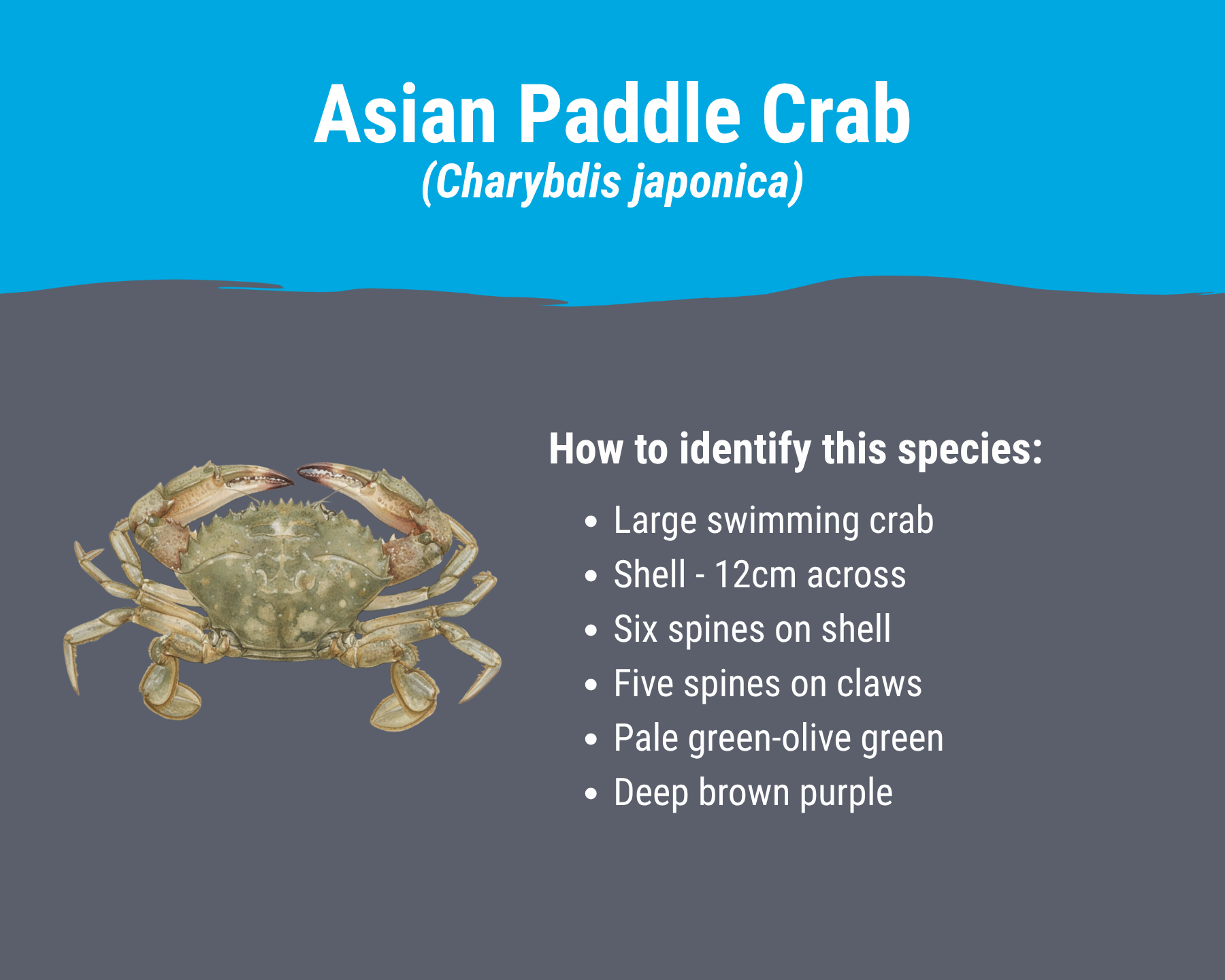
The Asian paddle crab, Charybdis japonica, was selected as the target species as it has already established populations in several of New Zealand’s harbours. Originally from Asia, this aggressive crab preys on shellfish, fish and other crabs, and can directly compete with our native crabs and other seabed fauna.
In areas of New Zealand where control efforts are underway, methods rely on baited traps to remove crabs in certain harbours. We hope to bring an alternative, more cost effective, and efficient approach to the table that doesn’t require daily monitoring and removal of crabs. This ambitious project aims to leapfrog over 30 years of development time by taking lessons learned from similar approaches to control land pests such as possums.
The AI-powered traps will be fitted with an underwater camera that will collect images of the crab as it approaches the trap. Based on algorithms housed in the trap’s onboard computer, the device will either eject the crab if it is a native or contain the crab and immediately crush it if it is the target pest. Unlike baited traps, these AI-traps could be left for long duration (months) at a time to control crab numbers while simultaneously collecting data. Beyond this project, the AI software can be upgraded to account for species not already in NZ to improve our response readiness against new crab incursions at invasion hotspots.
Efficacy testing will be first undertaken on dead crabs caught as part of ongoing pest trapping efforts, as well as on gel blocks to test the forces required to instantaneously ‘crush’ the crab’s nerve centers. We will then test the mechanism on a limited number of live crabs to confirm that the trap is both effective and humane.
A prototype trap will then be deployed in an invasion hotspot alongside traditional trapping methods, and its performance evaluated.
This is an important time for marine biosecurity science. Over the past two decades, New Zealand agencies have attempted to manage or eradicate several high-profile marine pests, with varying levels of success. Our failures often reflected the lack of cost-effective tools that could be applied at meaningful scales to reduce populations fast enough.
The development of new tools in our research programme, along with modelling-based strategies on how to best deploy them, has the potential to radically change what is and isn’t possible to manage in the sea.
More information on the Managing Marine Pests Aotearoa research programme