
Innovation profile: robotic hull grooming comes to Auckland
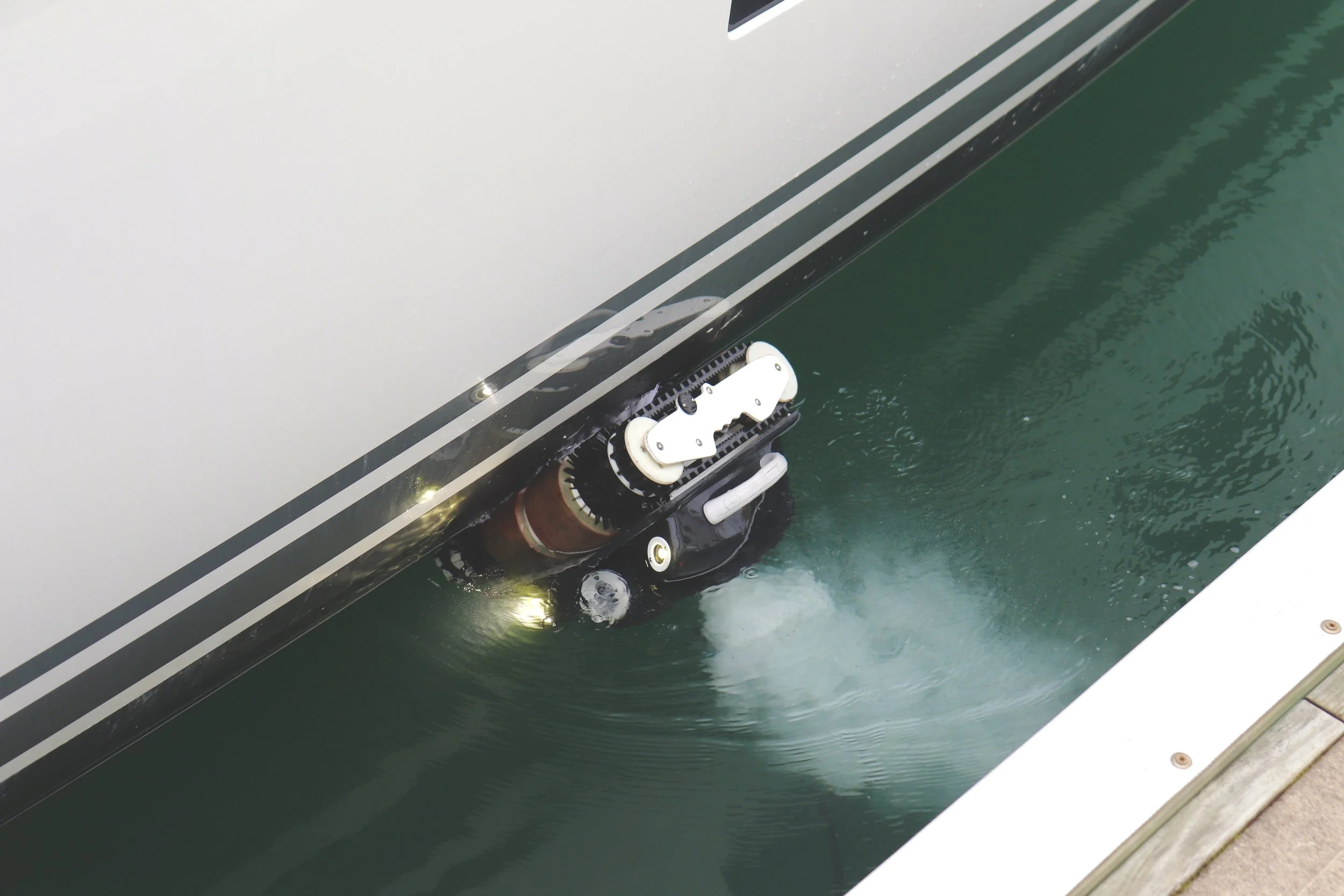
Auckland boat owners can now use an underwater robot to help keep their hulls clean without moving their vessel from its berth. Hull Guardian founder Bradley Sanson has introduced what he believes is New Zealand’s only service of its kind, using an Italian-made remotely operated vehicle to groom boat hulls and remove early-stage slime and biofilm.
Bradley came across the technology through boating friends.
“I understood the pain point of having a dirty hull and needing to arrange regular haul-outs,” he says. “Robots mow our lawns and vacuum our houses, so it got me thinking about whether robotic technology could help solve this problem too.”
Bradley, whose background is in technology and data, researched the international market, and found that robotic hull cleaning was already used in commercial shipping and was beginning to move into the recreational boating sector.
He imported the robot from Italy and launched Hull Guardian in Auckland around five months ago. He currently balances the business alongside his full-time career, but with demand rapidly growing across Auckland, he is actively scaling Hull Guardian toward going full-time.
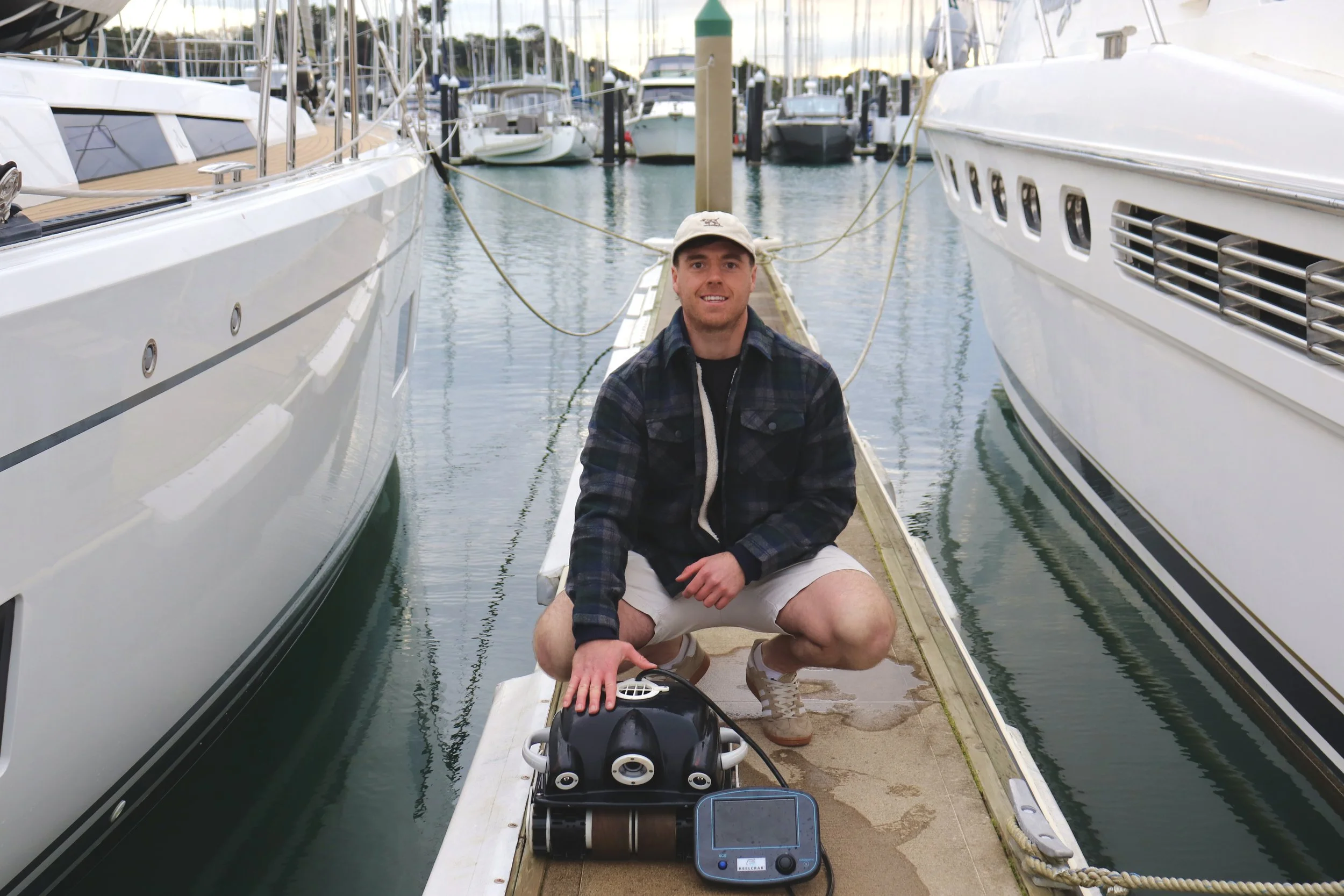
“The feedback and uptake have been great,” he says. “People see it as a clever and practical way to look after their boat. I also love being outside and around the water, so it is something I am passionate about growing.”
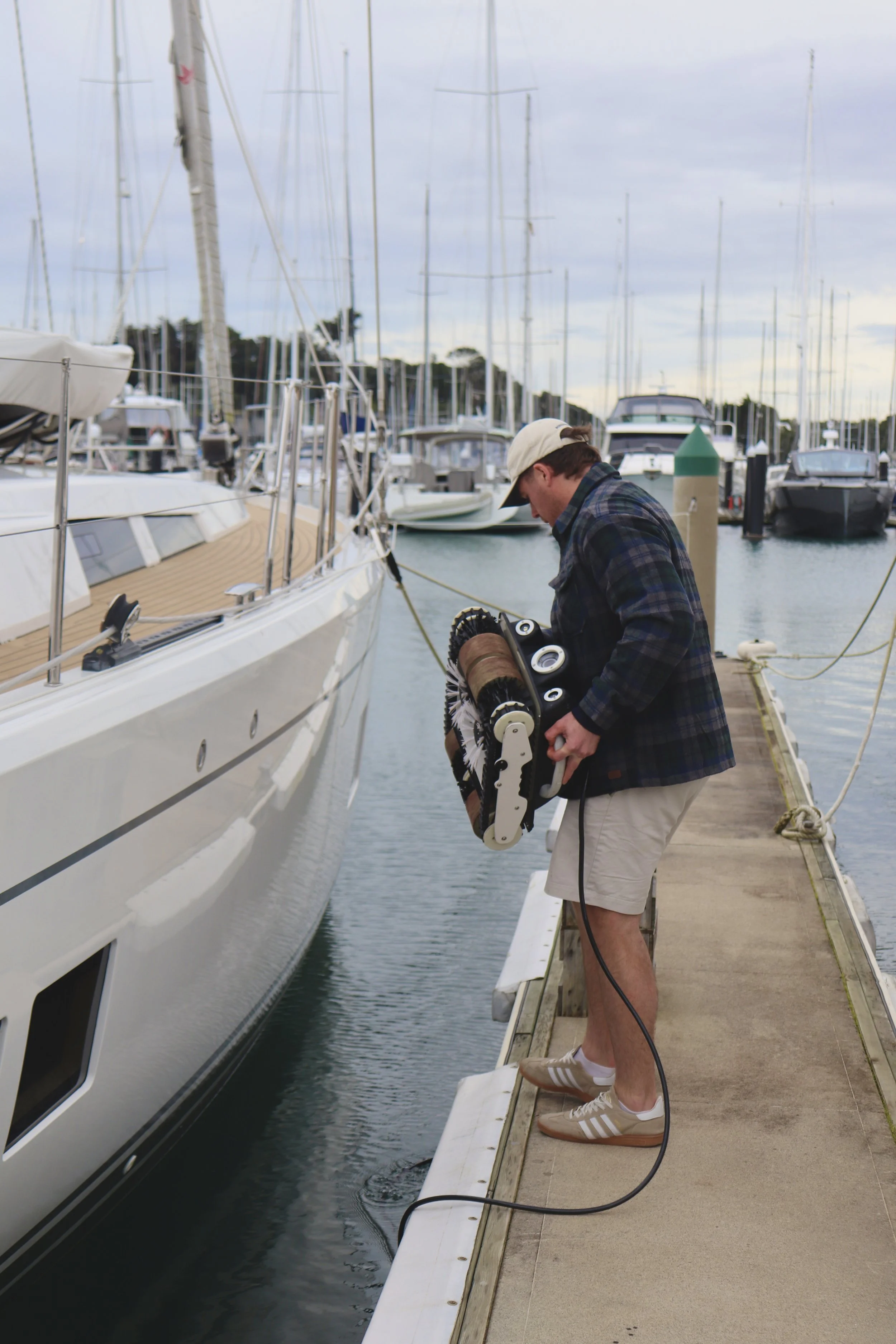
Securing contractor access to Westhaven Marina, Orakei Marina and the Outboard Boating Club has been an important step. Hull Guardian can take the mobile equipment directly to a boat’s berth, meaning the owner does not need to move the vessel or be present during the service.
The robot uses a pump to push itself against the hull, allowing it to travel across its larger surfaces. Soft nylon brushes remove light slime and biofilm, while a vacuum system collects the dislodged material in a 50-micron filter rather than releasing it into the marina. According to Hull Guardian, the system can groom more than 95 per cent of suitable hull surfaces.
A camera records each operation, allowing Bradley to inspect the hull and provide the owner with before-and-after images and video. The footage is also reviewed with AI assistance to help identify unusual growth that may warrant closer examination, including possible marine pests. Any suspected marine pest would still need to be reported and formally identified through the appropriate channels.
Hull Guardian is designed as a proactive subscription service. Bradley visits each boat on an agreed cycle, which might range from every two weeks for a racing yacht to every few months for a vessel used less intensively. By removing soft growth before it becomes established, regular grooming can support good biosecurity practice, reduce drag and help protect antifouling coatings.The robot can travel beneath the keel but cannot clean intricate niche areas such as propellers, shafts, bow thrusters and some intakes. Its cameras can, however, provide a visual check of running gear, anodes and other underwater components.
Bradley stresses that the service complements rather than replaces traditional haul-outs, boatyards and divers. Boats with established hard fouling, deteriorated antifouling or suspected marine pests will still need to be hauled out and professionally cleaned.
“Marinas are understandably cautious about new hull-cleaning methods and want to know the technology is being operated responsibly,” he says. “The goal is to offer a proactive service that helps owners keep on top of their hull condition between haul-outs.”
Clean Below? Good to Go shares information from time to time about new products becoming available to boat owners. These profiles are not recommendations. Hull condition, antifouling coatings, local rules and the nature of any fouling must all be considered before in-water cleaning is undertaken. Boat owners should research options carefully and consult the relevant marina, council or marine professional to ensure a proposed solution is appropriate for their vessel.